
Fairville project: where are we? (Part 3)
Three years after the launch of the Fairville project, one of the Research and Innovation Action (RIA) under Cluster 2 – Democracy of Horizon Europe, Fairville has continued to experiment with co-production involving civil society actors, universities, and local authorities. The goal has been to foster multi-stakeholder engagement in addressing deep-rooted urban and environmental inequalities, together with affected residents and community groups. The broader ambition is to contribute to rethinking urban democracy and inequalities through the co-production of knowledge and action-oriented programmes.
Following this approach, multiple activities have been carried out across the eight pilot cases (Fairville Labs) – Brussels, Berlin, London, West Attica, Marseille (Belle de Mai and Atelier 4-5), Giza, and Dakar – to explore the potential of co-production in tackling inequalities and reducing democratic gaps. So far, the project has worked in multiple directions and across different scales, from building knowledge to understand the relations between inequalities, citizens’ engagement and democratic quality to nurturing key academic debates and starting building of a counter-manual of co-production for fairer cities. Still, Fairville has experimented co-production across different scales within the Fairville Labs, while also taking the time to co-evaluate their activities. Finally, it has focused on exploring pathways for embedding and/or scaling co-production processes, while also developing collaborative communicative and dissemination outputs to support this endeavour.
All the discussions that shaped these work directions were carried out in a spirit of openness and collaboration by the project partners and within the Fairville Labs. They were richly debated and thoughtfully developed together during Fairville meetings, such as the Open Citizens meeting in Brussels in November 2023 (link to blog post), the Fairville Mid-Term Meeting in Marseille in June 2024 (link to blog post), and the Intermediary Brussels Workshop in March 2025, as well as during public events, including the Fairville Mutual Learning Seminars (link to blog post) and the Dialogue in Co-production seminar series (link to blog post).
Three consecutive blog posts provide an update on the main advancements and ongoing key debates emerged in these fruitful years, as well as offers a summary of the project’s main achievements.
PART 3
The nexus inequalities-democracy and co-production, work in progress (A. Deboulet)
This section has welcomed earlier discussions with WP1 members (K&I team, as well as reading from Alessio Koliulis (DPU), Daniele Mezzana (K&I), Kavyashree Swamygowda (CNRS) & Violante Torre (Paris 8).
Fairville’s research on the interplay between inequalities and democratic crisis are based on an approach that owns a tribute to the World Inequality Lab and the work of Thomas Piketty (2021) and Lucas Chancel. Inequalities are described as a central dimension of social, economic and property relationships and underline the “rise of territorial divides...weakening the coalitions necessary for economic reforms” whereas most of the countries had undergone a “march for equality” till the mid 90’s. The executive summary of the World Inequality Lab 2026 report (WIR 2026) states clearly that if inequality has always be a key feature of economies, it has reached an alarming level that threatens democracy. This growing concern is also what leads us to think co-production as a limited but nevertheless appropriate practical answer. It also allows to reconsider the proximities between economy and politics and bring a political economy reflection to the fore of democracy.
The findings of many thinkers (Duvoux, 2021; Florida, 2017) and WIR 2026 are clear: “inequality remains extreme and persistent; it manifests across multiple dimensions that intersect and reinforce one another; and it reshapes democracies, fragmenting coalitions and eroding political consensus. Yet the data also demonstrate that inequality can be reduced. Policies such as redistributive transfers, progressive taxation, investment in human capital, and stronger labour rights have made a difference in some contexts. Proposals such as minimum wealth taxes on multi-millionaires illustrate the scale of resources that could be mobilized to finance education, health, and climate adaptation. Reducing inequality is not only about fairness but also essential for the resilience of economies, the stability of democracies, and the viability of our planet (...)” (WIR 2026, executive summary).
Extreme wealth inequality is rapidly increasing. “Since the 1990s, the wealth of billionaires and centi-millionaires has grown at approximately 8% annually, nearly twice the rate of growth experienced by the bottom half of the population. This has concrete impacts of current climate crisis, that is also a very strong signal for democracies, as “the poorest half of the global population accounts for only 3% of carbon emissions associated with private capital ownership, while the top 10% account for 77% of emissions.” (WIR 2026, executive summary).
Stark contrast between regions in the world must be taken into account in our comparative analysis framework, in a situation where the gap between sub-Saharan Africa and Europe for instance has even widened (300 euros average monthly wage against 2900 in Europe). This being said, Therborn, Göran (2020) also underline the social dimension of inequalities in explaining the overlying challenges to democracy.
In urban studies and political sociology, academic traditions have since highlighted the role of injustice and here we are specifically concerned with some interesting works on spatial justice. E. Soja et al. (2011) also reminds us about “the spatial causality” of the justice as “a powerful mobilizing metaphor” (...) Struggling for greater (spatial) justice opens up a wider net to encompass many different forms of activism, encouraging them to come together in larger and more diverse kinds of coalitions. So the joining together of spatial + justice is a kind of extraordinary moment of conjunction” articulated with the “right to the city” movement”.
Nevertheless, if social movements and many circles of engagement are driven by injustice, injustice is a moral and normative category that derives from inequalities at all levels. If inequalities are deemed economically and morally compatible with the existing social order, then the feeling of injustice is weak. Feeling of injustice and fear of injustice is the main driver of engagement against inequalities, pointing in particular the role of sharp and rising inequalities that superimposes on existing entrenched, both structural and multi-factorial inequalities (see D1.2 Mapping of the impact of inequalities on political participation and democratic quality). This challenges usual access to amenities and equal opportunities and equally question the ability to drive progressive reforms. “Unequal access to public services (education, health, transportation and other infrastructures), job opportunities, and exposure to trade shocks has fractured social cohesion and weakened the coalitions necessary for redistributive reform. As a consequence, working-class voters are now fragmented across parties on both sides of the aisle or left without strong representation, which limits their political influence and entrenches inequality. In order to reactivate the redistributive coalitions of the postwar era, it is critical to design more ambitious policy platforms benefiting all territories, as they successfully did in the past” (WIR, executive summary).
Yet all injustice are not induced by inequalities, most of them are, for gender or race issues, they are impossible to undermine but it is often their activation in a given locality that ignites the feeling of injustice and possible mobilizations against an enshrined spatial and economic order. The question is for now that inequalities could be consistently reduced with at least two set of orientations. First progressive taxation and transfers (see the importance of the debate on the Zucman tax), that is fundamentally a matter of public debate and democracy. Second, by actioning national and local state to reintroduce public investment at a decent level and equal opportunities in school, health, social and environmental protection. This option is less and less visible and certainly less present at a national level marred with slow or rapid neo-liberalisation: the state is helping capital investment and getting away from most of the traditional tools from the welfare state (or social state).
As we come to reinforce a conceptual background for the research, the link between inequalities and democracy is deemed very accurate to describe the current challenges of our cities and nations. Growing income, educational, environmental and housing inequalities are structurally reinforcing the concentration of powers and their capacity to influence the state through “the influence of wealth in politics compounds the inequality in political influence through political donations“ (WIR 2026), the control and monopoly of information, the selective use and control of digital technologies, security infrastructure and ultimately political debates and orientations till the type of economic and social backlash many countries are experiencing at a growing pace. Therefore if injustice is often the first engine for reflexivity and critical thinking, Fairville aims to device internally and to settle action-research based on the necessity to move beyond the expression of injustice to identify enshrined inequalities and democratic backsliding in a context of growing populism (democracy index, 2024). Fairville labs participants are precisely involved, at all levels, on contexts-based experiments on their impacts and various avenues for solving-problems issues while bridging the expert-profane divide.
Let us clarify what are the commonalities between inequalities and democratic backdrop in the Fairville labs. Here we should go back to the WIR 2026, “The even more striking evolution is the rise of territorial divides within countries. In many advanced democracies, gaps in political affiliation between large metropolitan centers and smaller towns have reached levels unseen in a century”. This is also questioning –and Fairville being a project with European and African participants- the capacity to think and influence this “exorbitant privilege” “advanced economies became financial rentiers by design, through currency dominance, portfolio asymmetries, and institutional rules that perpetuate their advantage (...) these asymmetries act as barriers to development, draining resources from poorer nations” (WIR 2026, Exorbitant privilege). If the Fairville labs can do little about these rising global inequalities across democratic, authoritarian, and dictatorial countries except taking them seriously in the conceptual and ethical analysis and recommendations, other more localized strands of public action have been tested in the vast area of spatial inequalities and their spatialisation with their strong impacts on governance issues : access to all kind of public services, housing and environment, land, climate and mobility/migrations.
Yet Fairville campaign on housing and environmental inequalities are clearly pointing, at a local and international level, the shared responsibilities and the need to address them seriously to avoid millions more falling into poverty in Europe and elsewhere. Collective sharing of data, exercises of co-writing are small examples of possible way to re-empower collectively and use co-production as a stepping stone for mutual awareness-raising. Even if the scope is broader, it does not prevent us to believe that the reduction of inequalities and the necessity to redress democratic quality goes hand in hand. The next paragraphs will explain briefly what are our assumptions about the role of co-production and the main distance to be taken with the usual participatory democracy instruments. This being said, let us now explain why and how co-production helps re-frame collective action and democratic practice and rethink beyond the participatory necessity and the unfolding trap.
Without any doubt co-production is one of the many forms of participation, covering or targeting an “engaged citizenship” in the broader sense of a citizenship not restricted to ballot (Neveu, 2011) but develop forms of commonality (Luhtakallio & Tavory, 2018) or approaching values. Nevertheless, in Europe and many countries in the world, even not democratic, the participatory ideal has been forcefully developed as a companion to most human development initiatives and planning procedures. Within the ever increasing spectrum of participatory practices and the “turn to participation” in public discourses and policies (Brownhill & Parker, 2010), most of them are of a very different essence than co-production as they are conceived as tools of government and efficiency to avoid conflicts, seek for an increase confidence in democratic settings and increase consensus-building. In Europe, we can summarize these set ups as belonging to the participatory democracy which is the main reference for any spatial intervention and became mandatory at nearly every level of government and especially for territorial based decisions[1]. Critics of participation have been largely documented as shown is Fairville’s D1.2 report but still most of the polls and surveys show the persistent citizen’s expectation in open consultations and public debate that take their contribution seriously on important matters such as environmental impact, mobility, social policies.
Two major elements makes a difference among them: who has initiated the process and how far they are taking into account power asymmetries or negotiate around power (Brownhill, Parker, ib.). Within the deliberative turn of participation namely citizens are deemed to form their opinions on an equal base, open consultations or citizen’s jurys, assemblies etc., dismissing the role of power, gender (Hayat, 2011), race or class asymmetries. Since most of these participatory approaches (here, in urban regeneration projects that made participation mandatory) does not give more power to affected citizens or appear as “A façade for poor quality consultations” (Fairville London lab, consultation about street markets). In most countries of our Fairville consortium and beyond in the literature, false promises of formal participation have often widened the mistrust between citizens and local or national authorities, added to the conviction of wasted resources whereas inequalities would require clarity on public funds allocation. Participation now equates most of the time with procedural set up convinced by many researches to create obstacles to mutual understanding, power sharing. Equity dilemma is key to grasp the systemic barriers to the exercise of participatory democracy (Carrel, 2013), be it consultation mechanisms or the power to reclaim and organize within citizens council in their various forms in Brussels, London, Paris, Marseille, Berlin. The prominent concept of participation thus uncover partly co-production : our aim is not to reduce participation to an empty shell but rather to give right to its promises of deliberation and right to question (Bacqué, Balazard, 2025), going further to sustain progressive mobilisations for more democracy, reducing inequalities and therefore allowing for a re-politisation (Blondiaux, 2008). It might be an idealistic position but several mechanisms of evaluation and reflexivity will provide latter distance and capacity to reflect properly and in a substantive way about articulations with participation and real benefits of co-production.
[1] This stands also true for many non-european countries,”the concept is more and more often discussed as a form of engagement by different stakeholders at a policy and planning level, in particular as embedded via various bodies established within the sphere of formal governance” (Galuszka, 2019)
Co-production attempts to tackle these contradictions ?
This section owns a lot to internal exchanges within the Fairville community (thanks here to Claire Bénit-Gbaffou - AMU, Giuseppe Faldi - ULB and Alessio Koliulis - DPU, and Barbara Lipietz - DPU)
Co-production is often seen as part of the participatory democracy instruments. Our take on community-led co-production assumes two foundational differences, albeit relating co-production to “participation as collective engagement”. First, it starts from a preliminary claim, contest, expression of social movements or organized groups. In a way it meets the initial foundation of participation with its early XXth century “auto-gestion” or self-management engagement in the cooperative movement and in the work sphere. Here the “spatial turn” is playing a crucial role of remaking the inequalities and downplaying the solidarities : with the dismantling of working-class communities in and with factories, co-production stems mainly from spatialized communities assembled by the fate of territorial assemblages. Even if community-led co-production does not cover the majority of our cases, it is taken as a potential anchor for rescaling co-production and thus democracy with more equity, attention to inequalities expressed by concerned or affected groups and care for horizontality.
In an nutshell, based in Fairville’s inner discussions, co-production start from a real-life collaborative and solidarity-based set of practices “between domestication and wildness (entre domestication et ensauvagement” (Neveu, 2011) and expands it in an attempt to ‘salvage’ the failed promise of participation - both through reclaiming the distributive dimension of participation (sidelined in some of the more procedural reflections on participation) and deepening the democratic dimension of participation. Yet, engagement as a major conceptual framework to understand co-production logics and how it sustains democratic changes or oriented towards less inequalities is a preliminary condition of co-production : mobilisation cannot be decided or activated externally by state actors or chosen citizen’s intermediaries as it is often the case in policies for deprived areas, participation becoming also a form of moral economy with strong individual responsibility (politique de la ville in France, Soziale Stadt or similar policies in Europe, Hertting, 2024 ; Leclercq, 2024).
Second, at theoretical level, literature on service co-production positions at the highest level of Arnstein’s ladder of participation. At a practical level, it is clear that this is rarely the case. Yet, this category of co-production is a form of engagement of different actors in producing a service or a tangible output. That focus on the output part brings the risk of avoiding deliberation, right to question and ultimately, allowing only “professionalized” participation, restricting the direct democratic set of practices.
Our labs span over a plurality of cases but always try to reinstall this deep trust and cohesion of a collective work in progress with residents and activists sharing their concerns and the agenda with researchers and possibly, at some points, local authorities. Co-production-based experiments in the Fairville labs differ from most of the research-based initiatives inspired by citizen sciences or collaborative research. If we are clearly partnering to the same body of participatory research, in Europe, where needs for co-production seem to be less pressing than in the most dominated part of the global south, academics usually set the tone on installing knowledge co-production or approaching visions, with increasing alternative initiatives (energy provision, commons...). Major learnings have been addressed for instance from the collaborative approaches in knowledge sharing, usually led with captive audience such as patients or people living in poverty and approached through the voluntary or charitable sector (the celebrate approach on knowledge crossing launched by ATD quart-monde & Universities, Carrel, 2022). If co-production does not happen in a vacuum, in Europe in particular, we notice since the turn of the century a growing association between social movements (particularly in environmental and climate issues), discrete mobilizations in low-income districts (Carrel, 2022) and academics as well as long traditions in south America and Brazil through “extension” practices and the presence of independent technical and strategic facilitators (Deboulet, Havard dit Duclos, 2026 ; Whitaker Ferreira et al., 2025).
As we just finalized the participatory-action research in Fairville labs, an overview of the labs precisely is just an opening for a cross-case analysis of their outputs, practical findings and limits as well as conceptual conclusions. As an introductory remark, knowledge co-production is a major contribution and part of a voluntary action-research in each lab, sometimes challenging the routinised habits of service or citizen’s technical support and as such requiring a specific analysis taking into account knowledge co-production in other context of participatory researches (f.i, Carrel et al. 2025). Yet is it not the only dimension to be raised, “production” being also of other kinds.
One set of reflections that is challenging the relation between inequalities and democracy is that, through co-production, contesting claims are still perceived as threatening by some academics. Underpinning the axiological neutrality stance, many academics express some reluctance to engage or to collaborate with actors located in collective contest. If there is no denial about the ethical and epistemological issues around co-production, refusing these engagement is nevertheless limiting the capacity to expand the critic and collective action-planning for more democratic practices.
Second, there is a lack of institutional support to engaged research into long-term commitments with social movements, affected groups or mobilized groups for social and spatial justice in Europe. This will be developed in coming publications but we should note that co-production is much more accepted and routinised in countries with weaker or more recent state infrastructure (Urban KNOW programme, Johnson, Levy, Lipietz, 2025).
Third, we noticed that barriers in co-production are in our cases sometimes stronger in democratic settings than in authoritarian ones or in contexts with weak local authorities (low budget and technical staff). This could be explained by many factors but one or our findings is that the strong civic commitment is grounded in material and infrastructural changes : for instance an intense campaign of mapping in both cases documenting the speed of urbanization in the peripheries without a capacity (in Senegal) or a wish (in Egypt) for the local state to help the process. Therefore, it is bringing local authorities to cooperate with CSO’s and their technical bodies without undermining the importance of civil engagement. Pragmatic changes and transformative political visions (at least on the surface) can help co-production to happen with more opportunities in the remnants of welfare state, preventing co-production to be used as tactic replacement of failed/tokenism participation in planning leader to growing disenchantment (Abram, Weszkalnys, 2013). The prefix of co-production is key as it insists on horizontality, which does not mean equality, require some consideration to the discussion. It is also how political actors see the participants but we should not restrict to deliberative democracy. In addition, the semantic of “production” reminds us the importance of collective endeavours to forge something in common (service-delivery, data and knowledge, or even policies draft) as opposed to consultative and procedural participation that often does operate without a common orientation towards solving-problems mechanisms and tangible outputs.
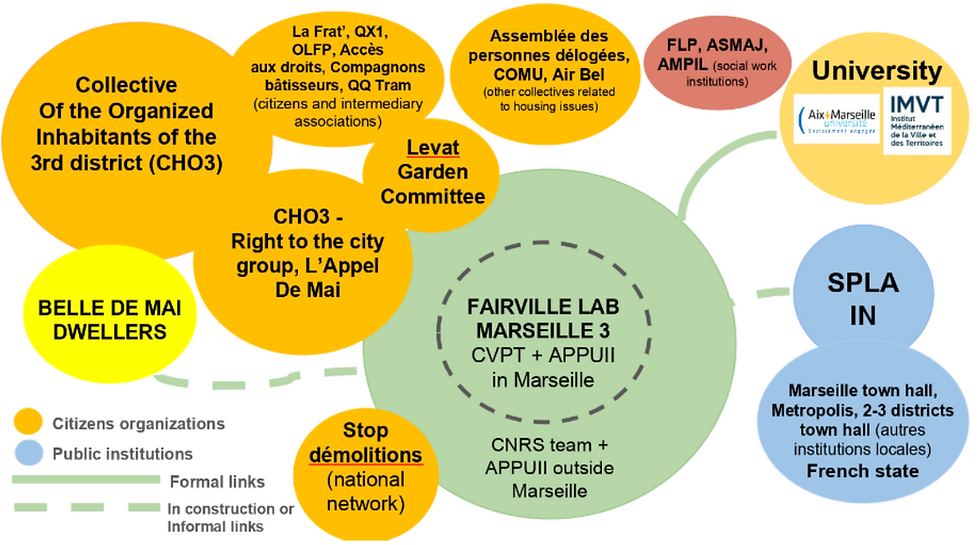
Yet the assessment of co-production benefits are also of another kind and their democratic assets are to be seized with different tools (WP4 - Co-assessing co-production benefits to reduce inequalities). Further developments to come in 2026 with cross-cutting analysis of epistemic justice in co-production, resourcing of co-production in a context of financial cuts to the third-sector. In addition we will link the results to an in-depth analysis of the role of intermediaries and facilitators in these constellation of co-production initiatives and will give a closer look at the mechanisms of knowledge-building keeping in mind the equality and inclusiveness agenda. Some inequalities have remained invisible but are slowly unveiled by the results of the research, among them digital inequalities, the persisting efforts in some north European fragmented contexts to maintain community-building even when it is at the origin of the priorities set for co-production. Among other statements to be discussed is the room for manoeuvre to be listened to, to get better accountability and to obtain institutional support for co-diagnosis inequalities. Another framing would be to unpack the various power relations and empowerment issues at the heart of co-producing “knowledge in action” (Lall, Mehra, Narayan, 2024) in order to influence local political agendas for more equality (for instance Marseille Belle de Mai advocacy campaign on housing precariousness). And finally, as no sustainable change can be achieved without long-term commitments, what are the mechanisms and possible supports for co-production beyond the project[1]? Fairville findings will now lead us to interrogate individual and collective engagements, university and community-based alliances in the light of their capacity to erect new practices for long term equal support at a local and supra-local level.
This blog post was written by Fairville project coordinator Agnès Deboulet
[1] referring to WP5 - Scaling co-production practices in, to and beyond the city
References
· Abram, S., & Weszkalnys, G. (2013). Elusive Promises: Planning in the Contemporary World. An introduction. In S. Abram & G. Weszkalnys (Eds.), Elusive Promises: Planning in the Contemporary World. (pp. 1-34). Berghahn Journals.
· Bacqué, M.-H. et Balazard, H. (2025). Démocratie d’interpellation ou d’initiative citoyenne ? Retour sur la proposition de création d’un fonds pour l’interpellation citoyenne. Mouvements, 121(3), 26-33. https://doi-org.accesdistant.bu.univ-paris8.fr/10.3917/mouv.121.0026.
· Bedock C., Pilet J.-C. (2023). Enraged, engaged or both ? A study in the determinants of support for consultative vs binding mini-publics, Representation, 59(1), 33-53
· Blondiaux L. (2008). Le nouvel esprit de la démocratie. Actualité de la démocratie participative. Seuil. La république des idées.
· Brownill S. & G. Parker (2010). Why Bother with Good Works? The Relevance of Public Participation(s) in Planning in a Post-collaborative Era, Planning Practice & Research, 25:3, 275-282, DOI: 10.1080/02697459.2010.503407
· Coordination. Carrel, M., Fiorini, C., Gaudillière, J.-P. et Godrie, B. (2025). Éditorial Co-produire les savoirs : une urgence scientifique et démocratique. Mouvements, 119(1), 7-14. https://doi-org.accesdistant.bu.univ-paris8.fr/10.3917/mouv.119.0007.
· Carrel M., (2022). “Discreet Mobilizations Against Discrimination: Informal Participation in the French Suburbs”, International Journal of Politics, Culture and Society, 36, 17–33 (2023). https://doi.org/10.1007/s10767-022-09434-x
· Deboulet A., Havard dit Duclos E., P. Urvoy, (2026). Solidarités et coproductions urbaines, Paris, L’oeil d’or
· Duvoux, N. (2021). Les inégalités sociales. Paris, Presses Universitaires de France.
· Hayat S., “Démocratie participative et impératif délibératif: enjeux d’une confrontation”, in M.-H Bacqué et Sintomer Y., La démocratie participative. Histoire et généalogie, La Découverte, p. 102-112
· Hertting, N. (2023). Participatory Bias and Participatory Neighborhood Governance: Reanalyzing the Most-Likely Case of the Stockholm Neighborhood Renewal Program. Urban Affairs Review, 60(2), 674-705. https://doi.org/10.1177/10780874231203919 (Original work published 2024)
· Johnson, Levy, Lipietz, 2025 Lipietz, B., Johnson, C., Castàn Broto, V., Lombe, W.J., Ortiz, C. Osuteye, E., Levy, C. (2025). Co-production of Knowledge in Action. Emancipatory strategies for urban equality. UCL Press.
· Lall, R., Mehra, R., & Narayan, M. (2023). Co-producing knowledge in action: Reflecting from the Main Bhi Dilli campaign for equitable planning in Delhi. Planning Theory, 23(4), 356-376. https://doi.org/10.1177/14730952231184339
· Leclercq, B. (2023). La non-participation dans les quartiers d’habitat social : signe du désintérêt des classes populaires pour leurs espaces de vie ? Participations, 37(3), 31-60. https://doi-org.accesdistant.bu.univ-paris8.fr/10.3917/parti.037.0031.
· Luhtakallio, E., Tavory, I. (2018) Patterns of engagement: identities and social movement organizations in Finland and Malawi. Theor Soc 47, 151–174 (2018). https://doi.org/10.1007/s11186-018-9314-x
· Neveu, C. (2011). Démocratie participative et mouvements sociaux : entre domestication et ensauvagement ? Participations, 1(1), 186-209. https://doi-org.accesdistant.bu.univ-paris8.fr/10.3917/parti.001.0186.
· Piketty, T. (2021) Une brève histoire de l’égalité. Seuil
· Soja E.W, Frédéric Dufaux, Philippe Gervais-Lambony, Chloé Buire, Henri Desbois. Spatial, Justice and the Right to the City: an Interview with Edward Soja. Justice spatiale/Spatial justice, 2011, Gender, sexual identities and spatial justice, 3, http://www.jssj.org/article/la-justice-spatiale-et-le-droit-a-la-ville-un-entretien-avec-edward-soja/. halshs-01722418
· Florida, R. (2017). The new urban crisis, Basic Books
· Fung, A., & Wright, E. O. (2001). Deepening democracy: Innovations in empowered participatory governance. Politics & Society, 29(1), 5-41.
· Galuszka, J. (2019). What makes urban governance co-productive? Contradictions in the current debate on co-production. Planning Theory, 18(1), 143-160.
· Therborn, G. (2020) Inequalities and the Labyrinths of Democracy. Verso Books.
· Whitaker Ferreira, J.-S., Deboulet, A. et Talpin, J. (2024). Circulations militantes et académiques : l’extension de la lutte dans la gouvernance municipale. Participations, 40(3), 175-192. https://doi-org.accesdistant.bu.univ-paris8.fr/10.3917/parti.040.0175.
· World Inequality Lab. (2026). World Inequality Report 2026. Coordinated by Lucas Chancel Ricardo Gómez-Carrera, Rowaida Moshrif, Thomas Piketty


Comments